Lou Sheppard
Dawn Chorus / Evensong
A Strong Desire
Continental Drift
Requiem for the Polar Regions
Requiem for the Antarctic Coast
Tide Phase
27 Names
Silent Spring
My Fears of Tomorrow are Melting Away!
Song of the Great Auk, the Passenger Pigeon, The Labrador Duck
What We Can't Say in English
Sasaktchewan Song Cycle
Video work, 2009-2016
Texts
Bio, CV and Contact
Next Page
Back to Contents
Previous Page
Next Page
Dawn Chorus/Evensong: Toronto/Tkaronto, 2018
Two compositions based on the translation of spectrograms of observed birds at Fool's Paradise, the home of Doris McCarthy on Lake Ontario. The spectrograms were traced onto a musical staff and played as musical notation. The notation for these pieces is presented as two graphic scores created from the original spectrograms.


A Strong Desire
Created by Lou Sheppard
Rehersal Direction and Performance by Leelee Eko Toyosi Davis
There is a concept in translation theory called the lacuna. The lacuna is a lexical gap, where a direct equivalent between two languages doesn’t exist, creating a loss of meaning between an original and its translation. It is a place of slippage, a place where the assumptive linear is loosened. Is it possible that the lacuna could be read as a queer space? We find queerness in the liminal, unchartable places in our language and in our identities. We apprehend queerness through resonance, a slippage in meaning that amplifies an otherwise illegible connection. A Strong Desire reflects on these resonant possibilities, suggesting that queerness is apprehended in the places where meaning is not.
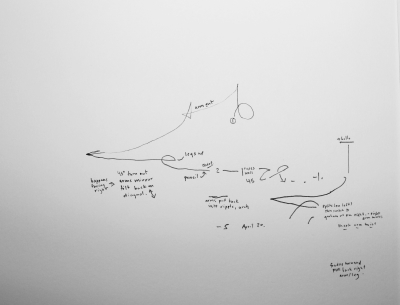
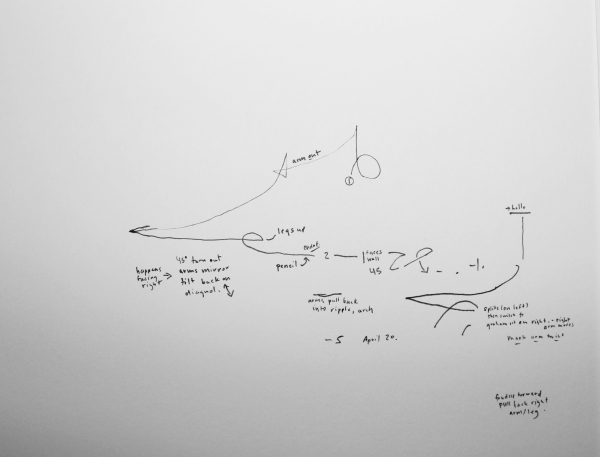
A Strong Desire is a translation of the Diagnostic and Statistical Manual of Mental Disorders (DSM-5) diagnostic criteria for gender dysphoria into a dance. The DSM text represents a psychiatric diagnosis that allows access to trans health care like hormone therapy and surgery. It also represents the medicalization of Trans identity, acting as a barometer against which Trans experience is judged. Starting from the text Lou found the shapes and lines of Labanotation, a choreographic notation system, in the spaces between each word. These shapes were then scored and read, resulting in a set of movement directions. Leelee then took these directions and translated them into dance.
Publication with writing by Arielle Twist, Nolan Natasha Pike and Lou Sheppard


Previous Page
Back to Contents
Next Page
Continental Drift
Ongoing January 1, 2018- December 31, 2018
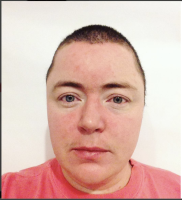
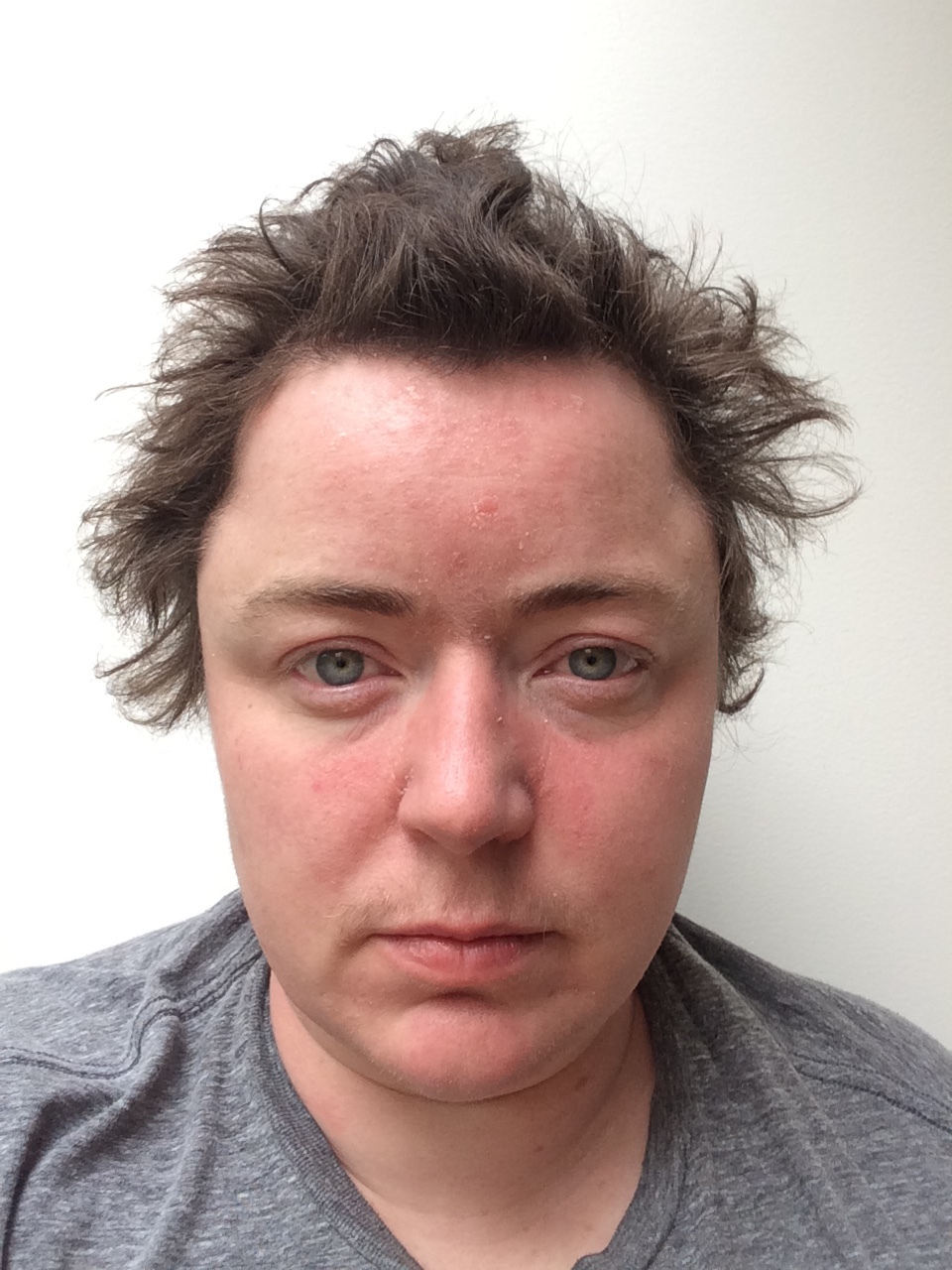
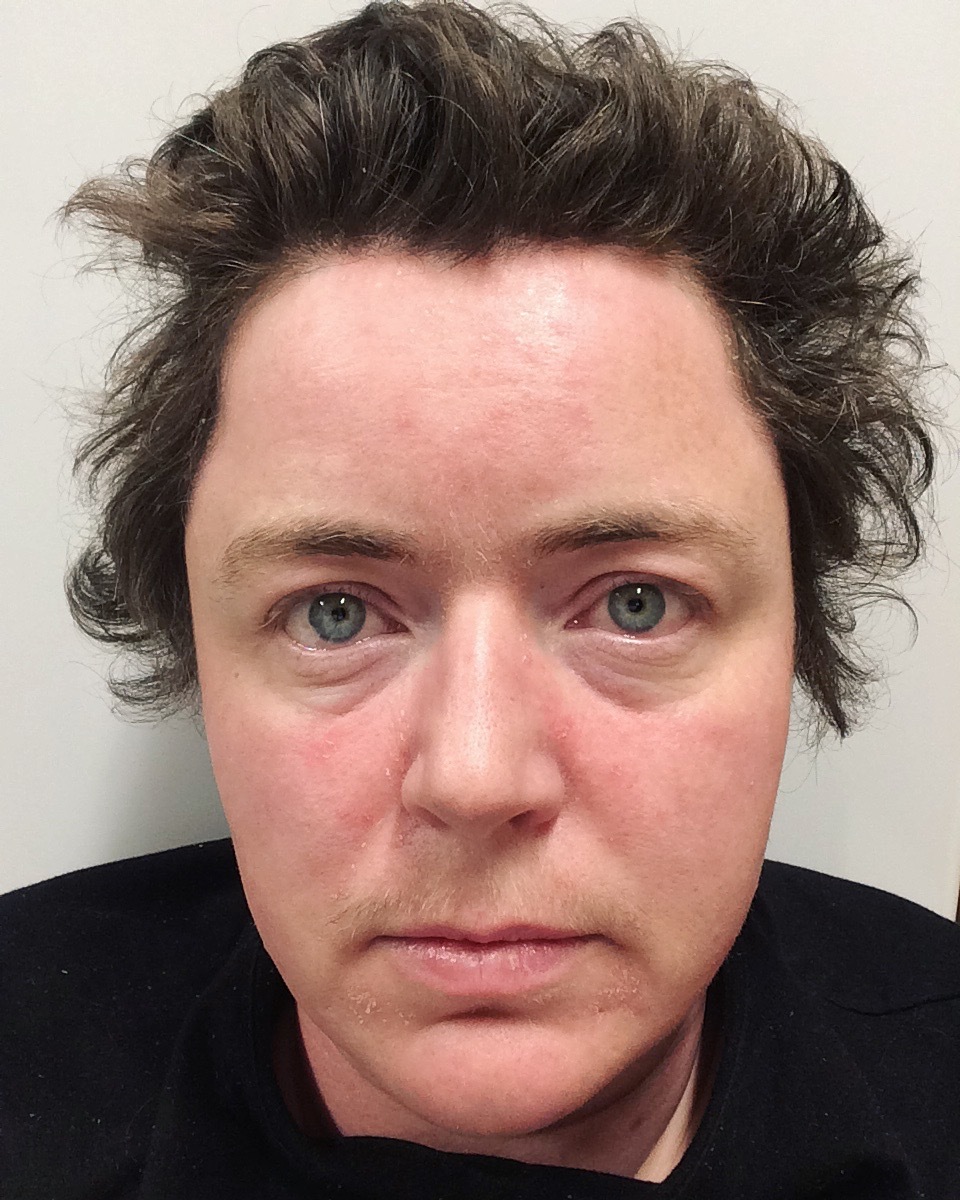
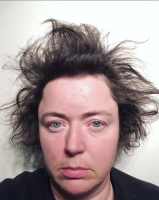
In 2017 my partner and I decided to separate. For a while I tried to hold this separate from my art practice but, despite my best efforts, the impact of this separation began weaving its way in to my studio. This experience has led to a new project, a year long consideration of how geologic time is measured and kept in the body. Inspired by the analogy between hair and fingernail growth, and continental drift, this project looks at how human experience compares to geologic events. On January 1st, I enacted a ritual of public mourning, shaving my hair and cutting my fingernails. I am now allowing them to grow back over the next year. Each day I post a image on my social media accounts, as a document of this performance. Throughout the year I will save all fingernail cuttings and at the end of the year I will shave my hair back again, retaining it to create a sculptural record of analogous movement between my own body, emotional state and the movement of tectonic plates.















Back to Contents
Previous Page
Next Page
Requiem for the Polar Regions
Created by Lou Sheppard
Programmer: Kenny Lozowski
Requiem for the Polar Regions is an aural record of the shifting masses of sea ice in the Arctic and Antarctic oceans, both the annual melt and reformation of ice, and the long term decline of ice in the Arctic. Using the data provided by the National Snow and Ice Data Centre in Colorado this automated program generates a musical score based on the perimeter and concentration of sea ice in the Arctic and Antarctic. The program maps the coordinates of the ice imagery to a musical scale, generating a distinct composition each day. Ice which reaches further from the poles sounds as lower notes, while ice that sits closer to the pole sounds as higher notes. The music produced by the program is discordant and jarring, the imperfection of the translation itself pointing to the disorientation and loss of climate change.
The project exists as an online installation, a gallery installation and a series of live performances. In this video you see the video from the online version, and documentation of a live performance at the Banff Centre this summer.


Back to Contents
Previous Page
Next Page
Requiem for the Antarctic Coast
by Lou Sheppard
For the Antarctic Biennale
Requiem for the Antarctic Coast is a composition for piano and strings extracted from the shape of the coastline of the Antarctic Peninsula, between Joinville Island at the tip of the
peninsula, and Winter Island in the Grandidier Channel. This 550km (plus) of coastline is the same that was covered by the Antarctic Biennale Expedition from March 17-27, 2017. A grid, which referenced a musical staff, was laid over satellite imagery of the coast. Points were determined on the grid where the contour lines of the satellite image came to a point, or shifted direction. This grid was then notated and transcribed into a musical score.
peninsula, and Winter Island in the Grandidier Channel. This 550km (plus) of coastline is the same that was covered by the Antarctic Biennale Expedition from March 17-27, 2017. A grid, which referenced a musical staff, was laid over satellite imagery of the coast. Points were determined on the grid where the contour lines of the satellite image came to a point, or shifted direction. This grid was then notated and transcribed into a musical score.
The composition was originally performed on site at Winter Island, on March 21, 2017, and was most recently performed live at the Pushkin Museum in Moscow.


Back to Contents
Previous Page
Next Page
Tide Phase Baxter's Harbour May 01-24, 2017 (2017)
Tide Phase is based on the predicted heights of the tide at Baxter’s Harbour, Nova Scotia, during the period of May 01- 24, 2017. Each 24 hour period is mapped to a musical scale, with notes corresponding to the predicted height of the tide. As happens on the shore each tide is layered on the tide before it, creating a phasic composition that reflects the cyclical nature of the tide itself. The accompanying visuals are graphic representations of the notation process, including a looped paper sculpture that shows how each tidal day flows into the next.


Back to Contents
Previous Page
Next Page
27 Names
ongoing
27 Names is a choreographic translation of the names of 27 people believed to have been killed as a result of Chechnya’s “gay purge.” Each name is spoken aloud, recorded and analyzed as a spectrogram. These spectrograms are translated into choreographic notation, creating a distinct gestural dance for each name. The dances are then performed in various spaces connected in some way to queer culture, (clubs, parks, cruising spots) and documented on phones. The work itself is an ongoing and open ended memorial.
Back to Contents
Previous Page
Next Page
Silent Spring: Sackville/Siknikt, 2019
A Choral Performance in the Sackville Waterfowl Park
Directed by Lou Sheppard (Artist in Residence, Struts & Faucet)
And Pamela Hart (The Forever Chorus, Montreal)
It is hard to imagine the sound of birds that have already gone extinct. There are some bird sounds that were lost before the technology existed to record them. The passenger pigeon was once so common that people described flocks of them as passing clouds obstructing the sun. The noise they made was apparently unbelievable- everywhere from harsh clucks to gentle melodies. It is strange to imagine how the sound of these birds would have changed our sonic environment.
The Sackville Waterfowl Park is home to 160 bird species. The sound of these birds forms a loud and complex chorus. It is incredible, and it is also fragile- bird populations are in decline due to habitat loss and depleted food supplies. The chorus we hear now may not be the same sound we hear in ten or twenty years time. Silent Spring: Sackville/Siknikt sounds what is missing from this sonic environment, as a memorial to what has been lost, and as a hope to draw these songs back to the area.
Our choir will perform the songs of ten bird species who’s population is missing or declining in the Sackville area. Spectrograms are sound images-visual recordings of frequency and duration in a sound. To create Silent Spring: Sackville/Siknikt Lou Sheppard has arranged the spectrograms as a graphic score, and then translated this score into a choral arrangement to be sung into the marsh.
---------------------------------------------------------------------------------
Silent Spring Montreal/Tiotia:ke, 2019
A graphic score of spectrograms from ten species of birds that are in decline in the Montreal/Tiotia:ke area. This performance was with (amazing) musicians Dustin Finer, Lex French and Jonathan Orland, recorded and mixed by Pamela Hart.
---------------------------------------------------------------------------------------------
Silent Spring, 2017
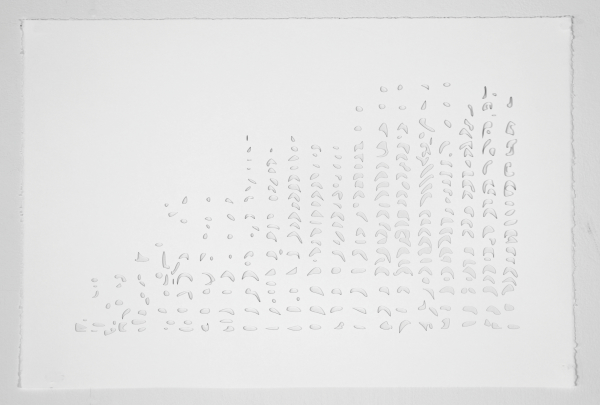
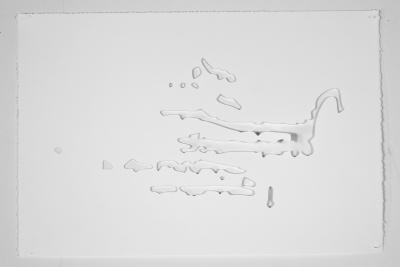
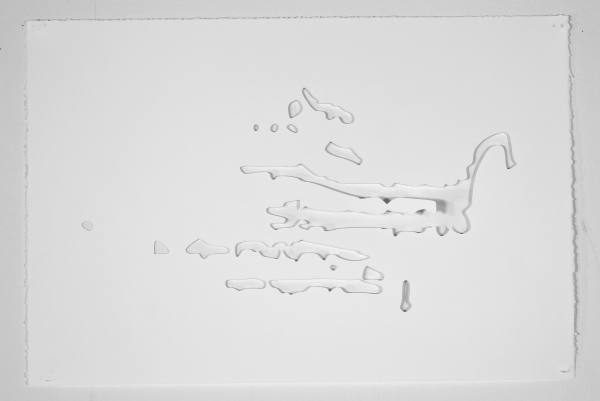
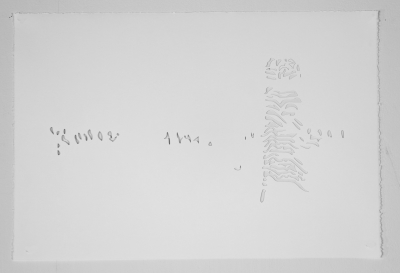
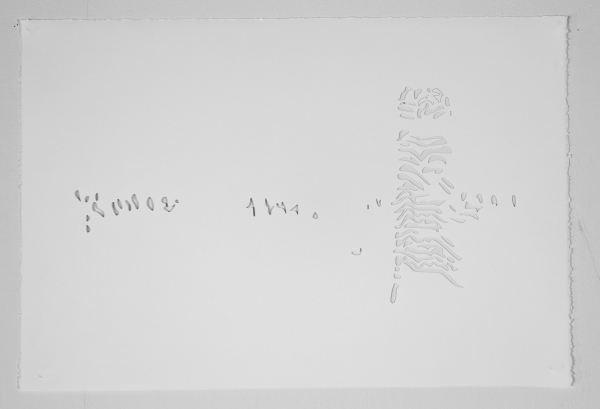
Inspired by the work of Environmentalist Rachel Carson, Silent Spring is a series of laser cut images of spectrograms from field recordings of songbirds.







Back to Contents
Previous Page
Next Page
My Fears of Tomorrow Are Melting Away (Vancouver, 2019)
Libretto for an Opera in Five Acts
The role of the individual in capitalism is to facilitate the production of goods and services and to consume those products and services so to advance the success of the nation, (or corporation). A productive member of society is one that labours, either in a factory or in a home supporting those that labour in factories, or one who manages these labourers, or supports these managers. A productive member of society is one who consumes the products and services of their society, contributing to their nation’s economy both through the production and purchase of goods.
In our current period of late capitalism labour is an increasingly expanded (and vague) concept, and consumption is no longer only based in products, but also in popular culture, celebrity, self branding and wellness. What are the labours of the late capitalist subject? Is the daily maintenance of a social media account- which does, after all, generate huge revenues for it’s corporate platforms - labour? Is participation in the wellness industry, (the performance of yoga, the adherence to diet, the practicing of meditation and mindfulness), which ready our bodies and minds for more production and consumption, labours that we must perform?
Increasingly the labour of the subject in late capitalism is the production of the self. Through self-branding, self-determination and self-actualization, we produce a capitalist subject who then continues to consume the products of self-actualization. To be “read” as good capitalist subjects we must construct our bodies and identities legibly: we must follow a regime of mental and physical fitness, we must maintain a viable social media presence, we must align our individualism with corporate brands.
The ritual of self affirmation–constructing the self by stating what the self is–is a clear example of this labour. Dr. Carmen Harra, Intuitive Psychologist and Life Coach defines 35 affirmations “…that will change your life” by restructuring negative thought patterns and affirming positive self-concept. My Fears of Tomorrow are Melting Away considers five of these affirmations as scores for the production of the capitalist individual.
The Italian word opera translates into English as “work.” Aligning the performance of opera with labour allows space to consider labour as a performative act–the labour of self-construction that constructs the self as labourer. Using the structure of an opera the installation is composed of five interconnected acts, each one performing a self affirmation. The installation, however, is not the opera itself, but rather the libretto, or score, of the opera, a series of evidences of labour performed, and an invocation for these labours to be performed again. The five acts, Overture, Aria, Recitative, Chorus, and Ballet explore the complexity of each self affirmation, the narcissism and hubris one must embody as well as the vulnerability and desire of self determination. Can acts of collective care, accountability, queer legibility, acts of release and the exposure of this labour become acts of resistance within late capitalism?
------------------------------------------------------------------------------------------------------------------------------------
My Fears of Tomorrow Are Melting Away (Paris, 2018)
By Sibyl Montague and Lou Sheppard
35 Affirmations that will change your life. Taken from Carmen Harra- Intuitive Psychologist and Life Coach.
Repeat five times, three times a day.
My life is just beginning.
Morning ritual mastery: morningritualmastery.org. (Define your morning ritual to master your life.) In the morning we wake up too late. We know that we should be up earlier, but we aren’t exactly sure why. We know we should get to work, because we measure our days against objectives. We eat a grapefruit carefully so the peel becomes a bowl to collect things in.
I possess the qualities needed to be extremely successful.
The Seine has been flooded for weeks. Lifting tree branches and bicycles and garbage cans into its bulk. We sit near the edge and wonder about having children. It doesn’t look like it is moving that fast. We start saving our fingernail cuttings to have a record of the time.
By noon one of us calls round for coffee. We go to the market. The animals curled in the cases, bald, their eyes bulging. We touch cashmere scarves with dirty hands—some of the cashmere sticking to us and some of us sticking to the cashmere. The man selling the scarves swears.
I am a powerhouse. I am indestructible.
We want to go to a libertine club, most likely just to watch. We want to see the men jumping around like bunnies. We remember a story about a pig with a beautiful voice. We remember a picture of a pig eating human faeces. We go in one of the churches to see a giant shell that holds the holy water. The shell is rimmed in gold. We look up the meaning of the word benediction. Paris seems like a city of layers sometimes. Our feet fit the dips worn into the stone steps.
I am at peace with all that has happened is happening and will happen.
Shape note, or the sacred harp, is a simplified tool for teaching sight singing. It was used mainly to teach religious songs and hymns to congregations in the Appalachian region of the United States. Positioning self-affirmations as a the sacred rituals of neoliberal congregants, these texts have been translated into shape notes by finding the notation shapes between the letters of each word, and then sung in the style of the sacred harp.
These blocks and cuts of vegetable jelly, infused with trimmings, clippings, husks and remainders, and displayed like meat at a market stall, intervene in a constant flow of detritus by processes of snagging and congelation. The shiny quivering mass is both inviting and repulsive- like cuts of flesh they are both familiar and abject. Over the course of a few days, the slabs will evaporate, releasing their objects back into the waste stream.
On the arcade men sleep on the floor in front of a store called Convertible Contemporain. While we are installing this show the men ask us if they can have the cardboard and plastic that is the runoff of our practice. We are both complicit and resistant in this economy of objects and desires.
My fears of tomorrow are melting away.


Back to Contents
Previous Page
Next Page
Back to Contents
Previous Page
Next Page
Song of the Great Auk, The Passenger Pigeon, The Labrador Duck (2019)
Vinyl Banners hung from telephone poles, installed in Sackville, New Brunswick. Text describes attempts to remember what the calls of each bird sounded like.


What We Can't Say in English
2019
Posters based on interviews with students and staff in McGill's faculty of Education.


Back to Contents
Previous Page
Next Page
Saskatchewan Song Cycle, 2019
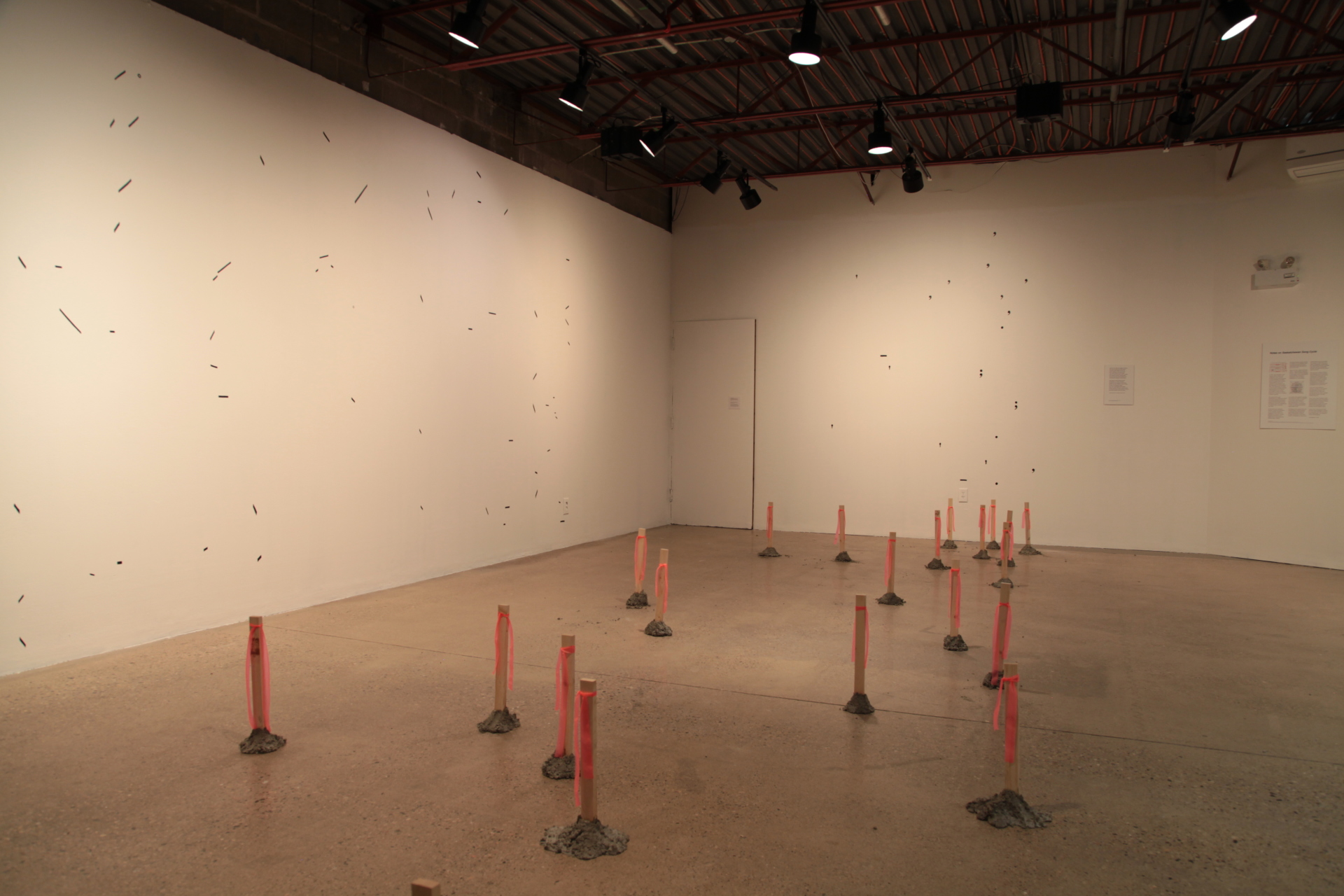
Saskatchewan Song Cycle is a transverse reading of two texts, the Dominion Land Survey in present day Saskatchewan and a poetic fragment from Susannah Moodie’s handbook for Canadian homesteaders, Roughing it in the Bush. The song cycle consists of three interconnected scores, extracted from these texts, and performed in the gallery space. Each score proposes a semiotic shift between language and performance as a means of identifying the construction and orientation of it’s source text. Correction Lines/Blend in Distance focuses on the spatial discrepancies between the curvature of the earth and the flat grid of the DLS, evoking this glitched space through tonal resonance. Desire Lines/These Solitudes reads the punctuation marks in Moodie’s poem as points of colonial lookout into an uncharted territory, marking them as points in a land survey and triangulating their location into the gallery space. Survey Lines/ Stretch Forth considers Laban’s concept of the kinesphere, which is- every place the body can move from a fixed point- as a means of survey and mapping.


Back to Contents
Previous Page
Next Page
Video Work
Clockwise from left
Somewhere Over the Rainbow/Fire Island 1979, 2016
For the Lucky and the Strong, 2009
Here We Are, 2007
Back to Contents
Previous Page
Next Page
Recent Texts
Back to Contents
Previous Page
Next Page
Lou Sheppard
Lou Sheppard is a Canadian artist working in interdisciplinary audio, performance and installation based practice. Of Irish, English and Scottish settler ancestry, Sheppard was raised on unceded Mi'Kmaq territory, and is based in Halifax/K'jipuktuk. Sheppard graduated from the Nova Scotia College of Art and Design in 2006 and then studied English and Education at Mount Saint Vincent University. In their recent practice Sheppard uses processes of translation and metaphor to interrogate structures of power in data and language. Their work is evidenced through installation, performance and score and often leads them to collaborate with other artists, including musicians, visual artists and performing artists. Sheppard has exhibited work both in Canada and internationally, and was included in the first Antarctic Biennale and the Antarctic Pavilion in Venice. In 2017 they received the Emerging Atlantic Artist Award and in 2018 they were long-listed for the Sobey Art Award. Sheppard is currently Artist in Residence in the Faculty of Education at McGill University.

Previous Page
Back to Contents